As the intense summer heat begins to fade, southern Tunisia enters one of the most enjoyable periods of the year. The days become cooler, the evenings more pleasant, and the vast landscapes of the Sahara become easier to explore.
For travelers looking to discover a different side of Tunisia, this is the ideal time to head south.
From Djerba, Tunis, Hammamet and Sousse, visitors can reach some of the country's most remarkable desert landscapes, ancient villages and oasis towns. A journey into the Sahara is not simply an excursion. It is an opportunity to experience another side of Tunisia, far from the Mediterranean coastline and the busy resort areas.
At Virsem Fun & Travel, we believe that the cooler season is one of the best times to discover the Tunisian Sahara.
Why Visit the Sahara During the Cooler Season?
The Sahara is often associated with extreme heat, but the desert is a destination that can be enjoyed in very different conditions throughout the year.
During the warmer months, daytime temperatures can make long journeys and outdoor activities challenging. As autumn arrives and the weather becomes cooler, the desert becomes much more comfortable to explore.
Walking through the dunes, visiting an oasis, riding a camel, exploring traditional villages or spending an evening in a desert camp becomes a much more enjoyable experience.
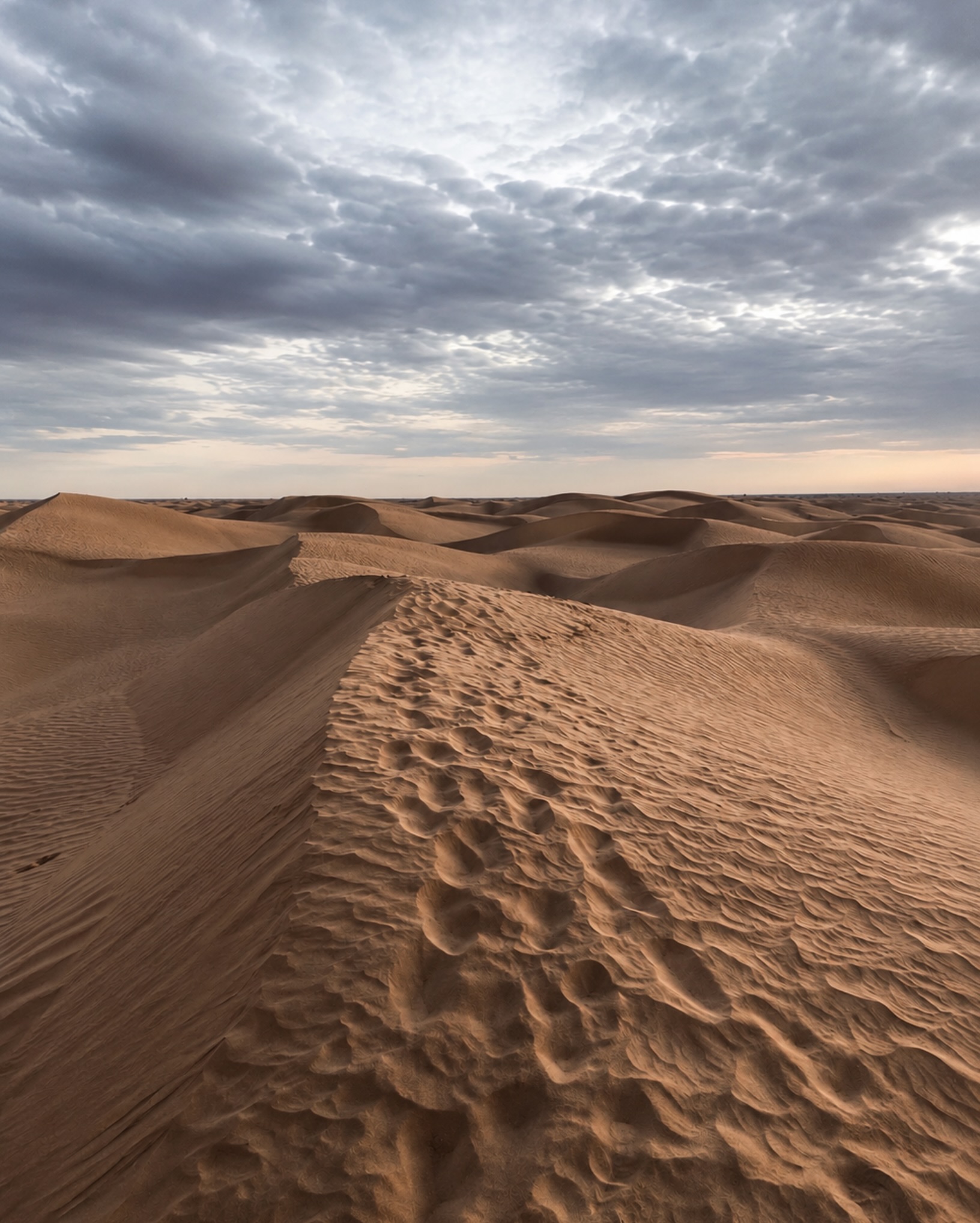
The cooler months also bring a different atmosphere to the desert. The light is softer, the air is clearer and the changing position of the sun creates remarkable colors across the sand. At sunrise and sunset, the dunes can appear golden, orange and sometimes almost pink.
It is during these quieter moments that the beauty of the Sahara is perhaps most impressive.
Sahara Djerba: From the Island to the Desert
For travelers staying in Djerba, discovering the Sahara is easier than many visitors realize.
Djerba is an excellent starting point for exploring southern Tunisia. From the island, travelers can continue toward the mainland and discover some of the most fascinating landscapes and cultural sites in the south.
A Sahara journey from Djerba can include destinations such as Matmata, Douz, Chott el Djerid, Ksar Ghilane, Tataouine and Chenini.
The journey itself is an important part of the experience. As you leave Djerba, the Mediterranean environment gradually gives way to dry plains, mountains, palm groves and desert landscapes.
Eventually, the landscape opens into the immense spaces of the Sahara.
For visitors searching for a Sahara Djerba experience, this combination of island and desert makes it possible to experience two very different sides of Tunisia during the same holiday.
Sahara from Tunis: From the Capital to Southern Tunisia
Travelers staying in Tunis can also discover the Sahara without having to limit their holiday to the north of the country.
A journey from Tunis toward southern Tunisia offers the opportunity to combine several of the country's most important historical and cultural attractions.
Depending on the itinerary, the route can include El Jem, Matmata, Douz, Chott el Djerid and Ksar Ghilane.
The journey from Tunis to the Sahara is a gradual transformation of landscapes. The urban environment of the capital gives way to agricultural areas, olive groves, open plains and eventually the dramatic scenery of southern Tunisia.
Along the way, travelers can discover Roman heritage, traditional architecture, underground houses and ancient communities that have adapted to life in some of the most demanding environments in the country.
The Sahara is therefore not simply the final destination. The entire journey south becomes part of the experience.
Sahara from Hammamet: Beyond the Mediterranean Coast
Hammamet is internationally known for its beaches, hotels and Mediterranean atmosphere. However, travelers who venture beyond the coastline can discover a completely different Tunisia.
A Sahara from Hammamet experience allows visitors to combine a stay on the coast with an exploration of the country's southern landscapes.
The journey south reveals a gradual change in scenery. The Mediterranean environment disappears behind you as the landscape becomes drier and more open.
Further south, the mountains, villages, oases and desert landscapes begin to dominate the horizon.
For travelers spending several days in Hammamet, a Sahara excursion can be an excellent way to discover a part of Tunisia that is very different from the country's traditional seaside destinations.
Sahara from Sousse: From the Coast to the Dunes
Sousse is another popular starting point for travelers interested in exploring southern Tunisia.
A Sahara from Sousse journey can combine cultural discoveries, historical sites and desert landscapes in a single experience.
Depending on the route and duration, travelers can visit places such as El Jem, Matmata, Douz, Chott el Djerid and Ksar Ghilane.
One of the most remarkable aspects of traveling from Sousse toward the Sahara is the dramatic transformation of the landscape.
The journey begins near the Mediterranean coast. Gradually, the landscape changes from coastal scenery and olive groves to wide plains, rocky mountains and finally the sandy landscapes of the Sahara.
It is a journey through several different environments, all within the same country.
The Beauty of the Sahara Today
The Sahara is often represented by images of endless sand dunes. While these landscapes are certainly part of its identity, the Tunisian desert is much more diverse.
The south of Tunisia combines sand, mountains, salt lakes, palm oases, ancient villages and traditional architecture.
Around Douz, the vast desert landscapes create the classic image of the Sahara, with golden dunes extending toward the horizon.
At Ksar Ghilane, the desert meets a green oasis surrounded by palm trees. The contrast between the golden sand and the vegetation makes the area particularly striking.
Further west, Chott el Djerid offers another completely different landscape. This enormous salt lake creates vast open horizons where light and reflections can transform the appearance of the landscape throughout the day.
In the Tataouine region, ancient ksour and Berber villages reveal another dimension of southern Tunisia. These historic settlements are closely connected to the environment and provide an insight into the traditional way of life of the region.
Together, these landscapes demonstrate that the Sahara is not simply a sea of sand. It is a vast and diverse region with its own history, culture and character.
Experience the Sahara, Not Just Visit It
A journey through the Tunisian Sahara can take many forms.
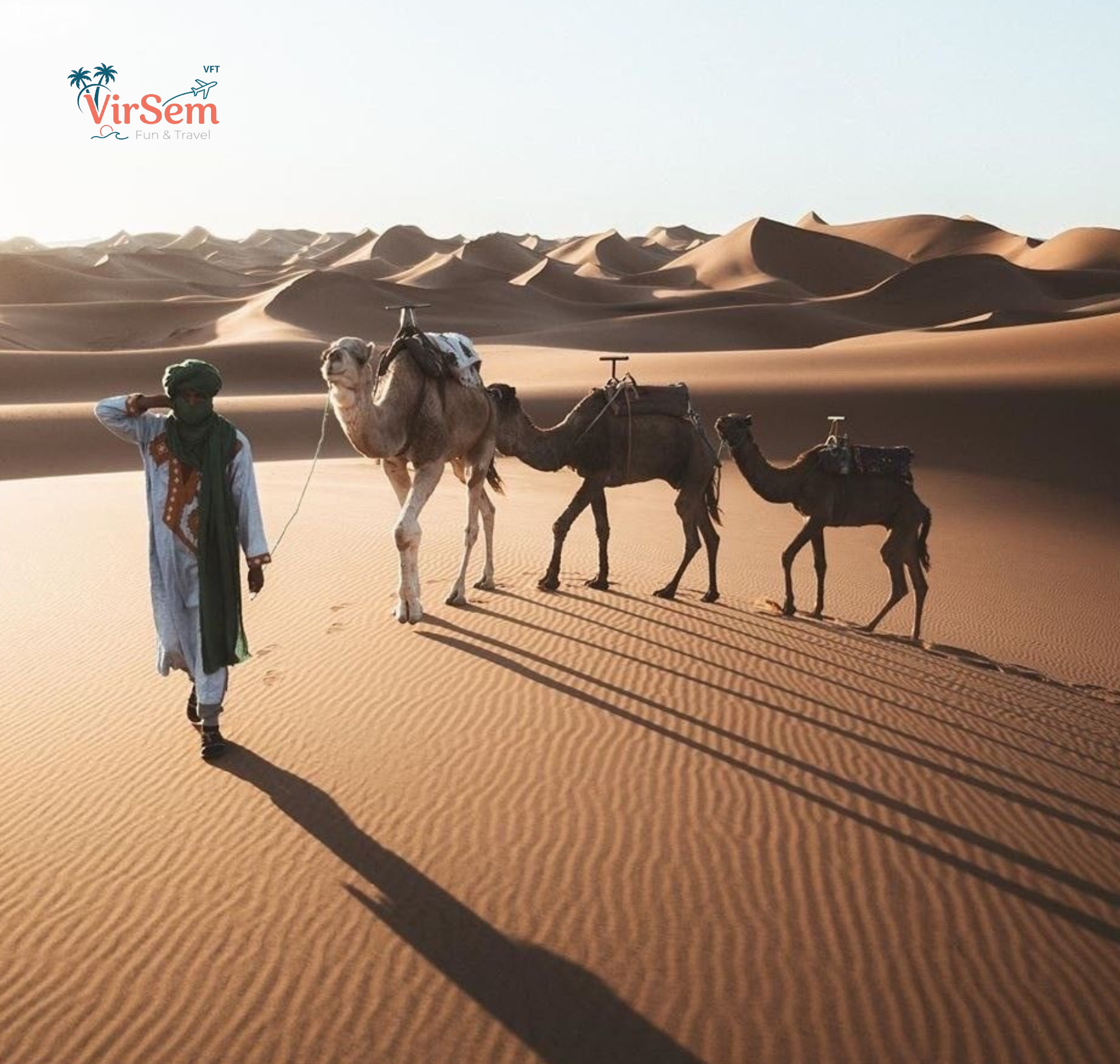
Travelers can cross the dunes by 4x4, ride a camel, explore an oasis, visit traditional villages or spend a night in a desert camp.
For others, the most memorable part of the experience may simply be sitting quietly in the desert at sunset and watching the landscape change as the sun disappears beyond the horizon.
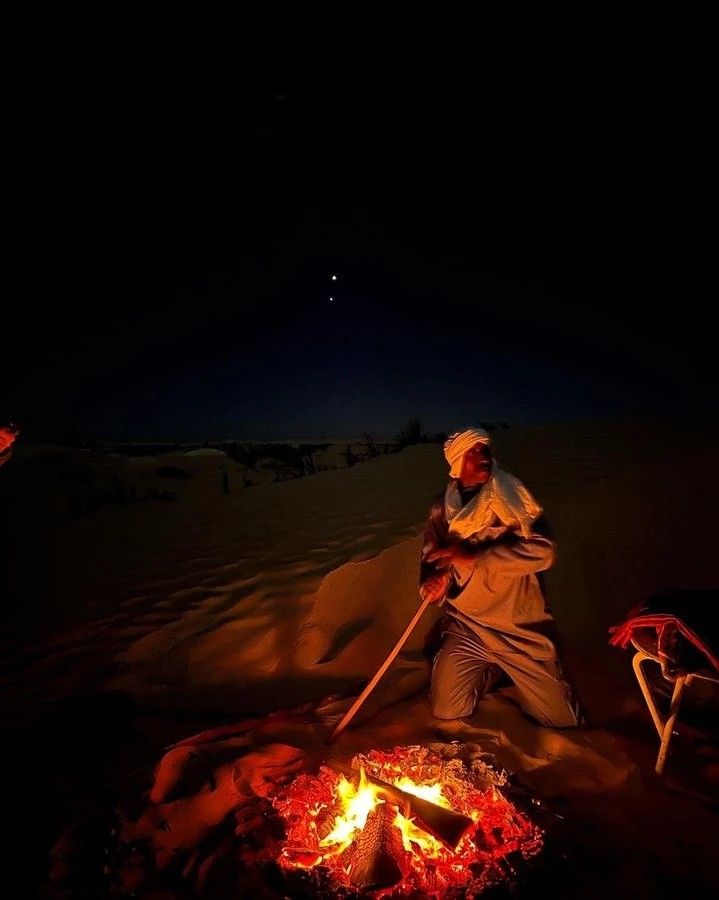
Night brings another transformation.
Away from the lights of the cities, the desert becomes exceptionally quiet. The absence of urban light allows the night sky to become one of the main attractions.
For many travelers, spending an evening in the Sahara is one of the most memorable moments of their visit to Tunisia.
The Sahara Is Waiting
As the weather becomes cooler, southern Tunisia becomes increasingly attractive for travelers looking for outdoor experiences, cultural discoveries and landscapes far removed from the traditional image of a Mediterranean holiday.
Whether you are staying in Djerba, Tunis, Hammamet or Sousse, the Sahara is within reach.
From the island of Djerba to the dunes of Douz, from the oasis of Ksar Ghilane to the mountains of Tataouine and the salt landscapes of Chott el Djerid, southern Tunisia offers an experience that goes far beyond a simple excursion.
At Virsem Fun & Travel, we create journeys that allow travelers to discover this region with local knowledge, comfortable transportation and carefully planned itineraries.
The cooler season is arriving.
The roads are open.
The desert is waiting.
It is time to go south and discover the Sahara of Tunisia.