If you're staying in Djerba and dreaming of golden dunes, desert camps, Berber villages and unforgettable sunsets, you don't need to travel across the whole of Tunisia to experience the Sahara.
Djerba is one of the most convenient starting points for exploring southern Tunisia. From the island, you can travel towards Matmata, Tataouine, Chenini, Ksar Ghilane and the Sahara dunes, combining landscapes, history and local culture in one journey.
But how many days do you need? Should you choose a day trip or an overnight excursion? What should you pack? And which places are actually worth visiting?
This guide explains how to plan a Sahara trip from Djerba step by step.
Why Start Your Sahara Trip From Djerba?
Djerba is more than a beach destination.
Its location in southeastern Tunisia makes it an excellent base for discovering the country's desert regions. From the island, travelers can cross to the mainland and continue towards the Dahar region, Matmata, Tataouine and eventually the Sahara.
For travelers who are already staying in Djerba, this means you don't necessarily need to travel to Tunis, Hammamet or Sousse before beginning your desert adventure.
The most popular routes from Djerba combine several different environments:
Djerba → Matmata → Tataouine/Chenini → Ksar Ghilane → Sahara
Each stop offers something completely different.
What Can You See Between Djerba and the Sahara?
One of the best things about traveling from Djerba to the Sahara is that the journey itself becomes part of the experience.
1. Matmata – The Underground Houses
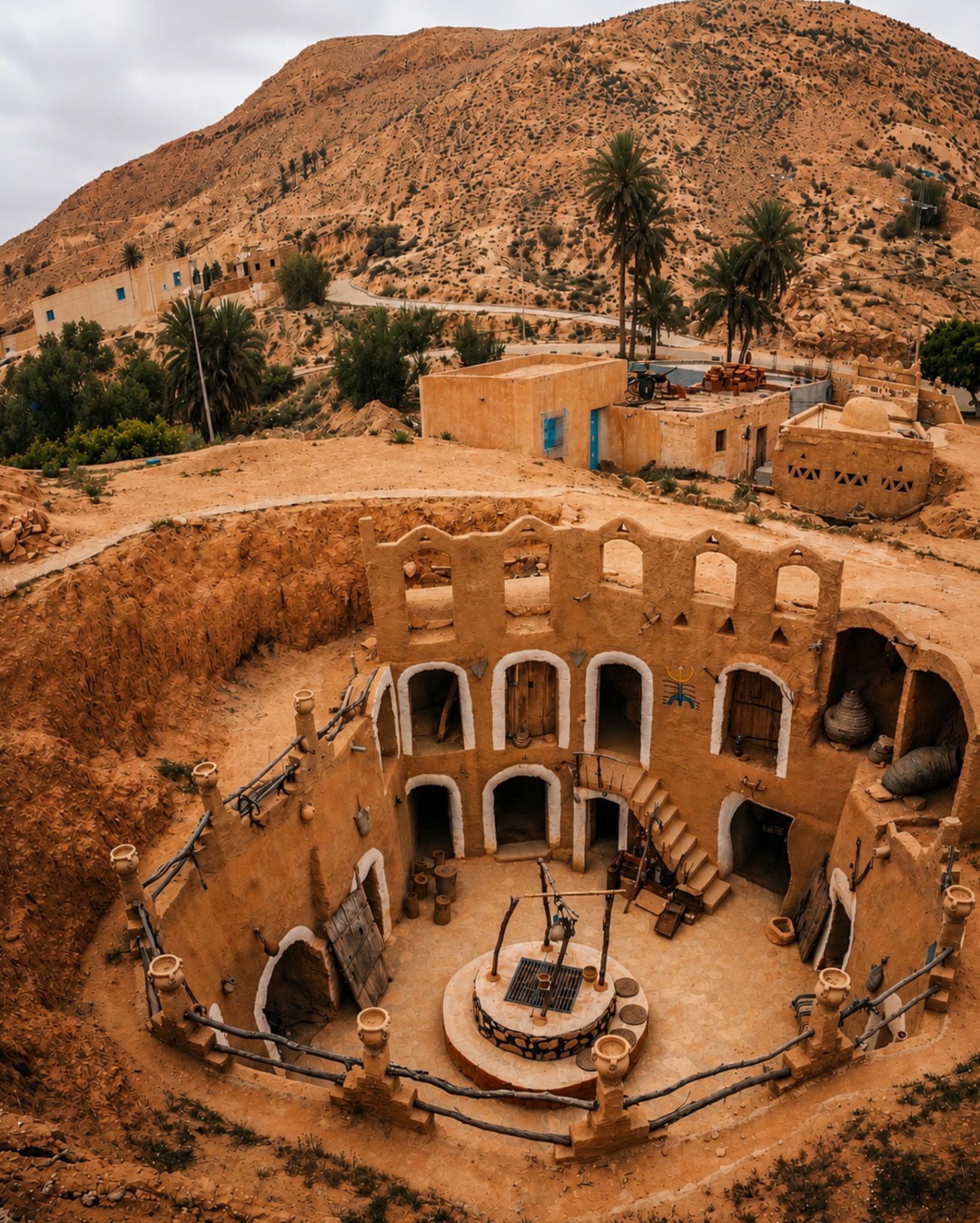
Matmata is famous for its traditional troglodyte houses, built around large underground courtyards.
These unusual homes were designed to provide protection from the extreme temperatures of southern Tunisia.
Matmata is also famous among movie fans because the Sidi Driss Hotel was used as a filming location for Star Wars.
If you're interested in architecture, history or cinema, Matmata is an excellent first stop on your journey south.

2. Tataouine and the Dahar Region
Continue south and you'll enter the spectacular Dahar mountain region.
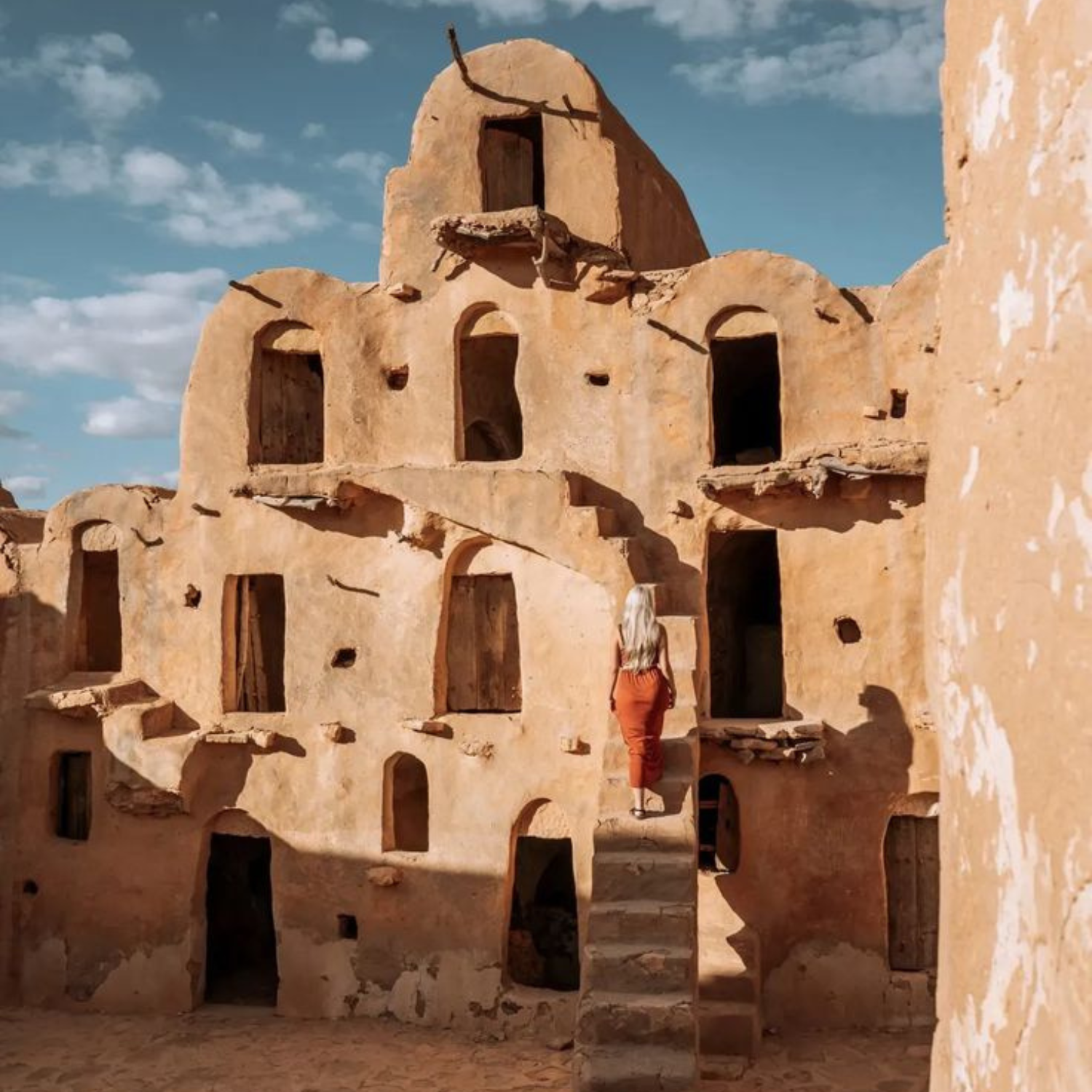
This area is famous for its traditional Berber architecture, fortified granaries known as ksour, mountain villages and dramatic landscapes.
Tataouine itself is an excellent gateway to explore this region.
For travelers interested in culture and history, this part of the journey can be just as memorable as the desert itself.
3. Chenini – A Berber Mountain Village
Perched dramatically on the mountainside, Chenini is one of the most recognizable villages in southern Tunisia.
Its traditional stone houses and ancient granaries blend into the surrounding landscape.
A visit here gives travelers a different perspective of Tunisia: this isn't simply a desert landscape, but a region shaped by centuries of adaptation to its environment.
4. Ksar Ghilane – Where the Oasis Meets the Sahara
For many travelers, Ksar Ghilane is the highlight of the journey.
The oasis sits on the edge of the Sahara and combines palm trees, desert dunes and a natural warm spring. It is also associated with the nearby Roman fort of Tisavar.
This is where you really start to feel that you're in the Sahara.
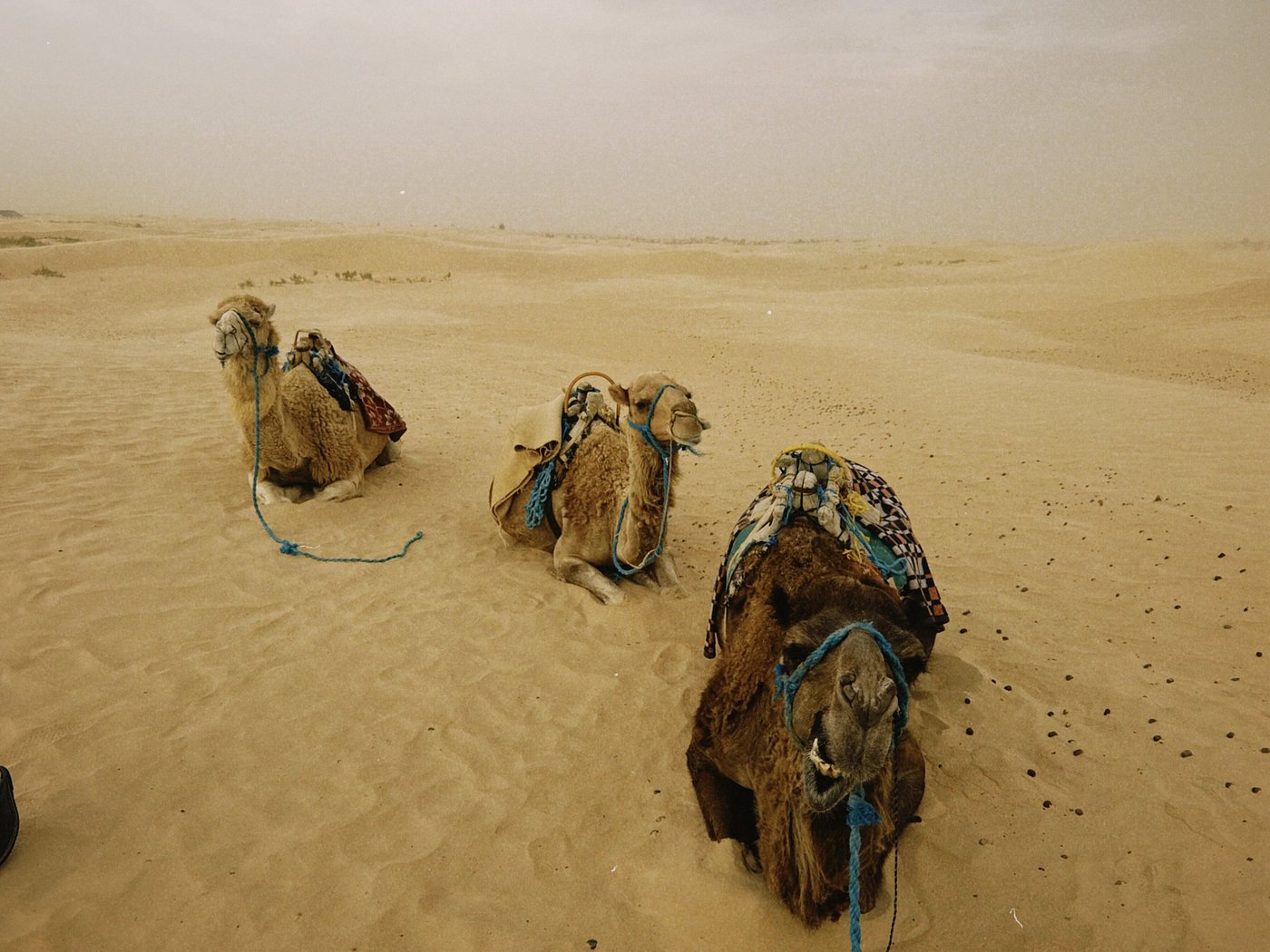
Depending on your tour, you can enjoy activities such as:
- Camel riding
- Quad biking
- Walking through the dunes
- Swimming in the natural spring
- Watching the sunset
- Spending the night in a desert camp
Ksar Ghilane can be visited as part of a long day trip, but an overnight stay gives you much more time to experience the desert.

How Many Days Do You Need?
This is one of the most important questions when planning your trip.
One day
A one-day excursion can work if you have very limited time.
You can concentrate on destinations such as Matmata, Tataouine or the nearby desert region.
However, trying to reach Ksar Ghilane and return to Djerba on the same day creates a very long day on the road.
Two days / one night ⭐
For most travelers, two days is the ideal minimum for a real Sahara experience.
A typical itinerary can look like:
Day 1
Djerba → Matmata → Tataouine/Chenini → Sahara desert camp → sunset → dinner → overnight.
Day 2
Sunrise → desert activities → Ksar Ghilane → natural spring → return to Djerba.
This type of two-day itinerary is already widely used because it allows travelers to combine cultural sites with an overnight desert experience.
Three days or more
If you have more time, don't rush.
A three-day itinerary allows you to spend more time in the desert and explore additional villages, ksour and oasis landscapes.
For travelers who really want to discover southern Tunisia rather than simply “see the Sahara”, 3–5 days can be an excellent choice.
What Is a Night in the Sahara Actually Like?
Sleeping in a desert camp is very different from staying in a normal hotel.
After sunset, the landscape becomes incredibly quiet.
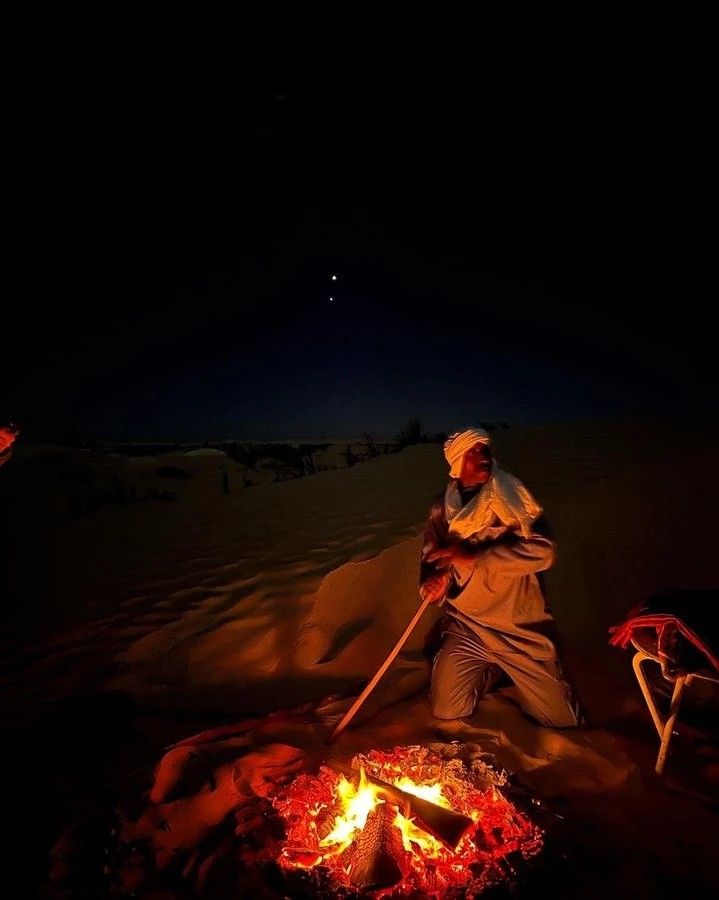
Dinner is usually served at the camp, followed by traditional music, conversation and time around the fire depending on the camp and itinerary.
Then comes one of the most memorable parts:
The night sky.
Away from the lights of the cities, the desert offers an incredible view of the stars.
In the morning, waking up early for sunrise over the dunes is highly recommended.
You don't need to bring a sleeping bag for most organized desert camps. Accommodation normally includes bedding, although facilities vary between camps.
What Should You Pack for a Sahara Tour From Djerba?
You don't need a huge suitcase.
We recommend bringing:
Essential items
- Comfortable clothes
- Comfortable walking shoes
- Sunglasses
- Sunscreen
- Hat or cap
- Water
- Personal medication
- Phone/camera
- Power bank
- A light jacket or warm layer for the evening
The desert can feel very different after sunset, so even if you visit Tunisia during a warm period, having an extra layer is a good idea.
And don't forget your camera.
The landscapes between Djerba, Matmata, Tataouine and Ksar Ghilane are some of the most photogenic in southern Tunisia.
When Is the Best Time to Visit the Sahara From Djerba?
The Sahara can be visited throughout the year, but the experience changes considerably with the seasons.
Spring
March to May can be an excellent period, with more comfortable temperatures for sightseeing and outdoor activities.
Summer
June to August can be extremely hot.
If you travel during summer, early starts and good hydration become particularly important.
Autumn
September to November is another excellent period for desert travel as temperatures become more comfortable.
Winter
December to February can offer pleasant daytime temperatures, but desert nights can become surprisingly cold.
The best period depends on what you want from your trip, but spring and autumn are generally the easiest seasons for long outdoor excursions.
Is the Sahara From Djerba Suitable for Families?
Yes, but choose the itinerary carefully.
Families with children can enjoy:
- Camel rides
- Desert landscapes
- Oasis visits
- Traditional villages
- Star Wars locations
- Desert camps
However, remember that southern Tunisia involves long drives.
For younger children, a private or small-group itinerary can be more comfortable because the schedule can be adapted more easily.
Should You Choose a Private or Group Sahara Tour?
There isn't one answer for everyone.
Group tour
A group tour is generally a good choice if you:
- Want to keep the price lower
- Enjoy meeting other travelers
- Don't mind following a fixed itinerary
Private tour
A private tour is better if you:
- Want more flexibility
- Travel as a family
- Want to spend more time taking photographs
- Have specific places you want to visit
- Prefer a more personalized experience
At Virsem Fun & Travel, we specialize in small-group and private experiences, allowing travelers to discover southern Tunisia with a more personal approach.
What Makes a Djerba-to-Sahara Trip Special?
The biggest mistake is thinking that the Sahara begins when you reach the first sand dunes.
The journey is part of the experience.
You start with the Mediterranean atmosphere of Djerba.
Then the landscape gradually changes.
The palm trees and coastal environment give way to dry plains.
Then come the mountains of the Dahar.
You discover villages built into the landscape, ancient ksour and underground homes.
And finally, the landscape opens into the vast desert.
That's what makes traveling from Djerba to the Sahara so special.
It's not simply a trip from A to B.
It's a transition from the Mediterranean to one of the most fascinating environments in North Africa.